
Note: This essay discusses Piranesi’s central mystery and transformation. Readers unfamiliar with the novel may wish to read it first.
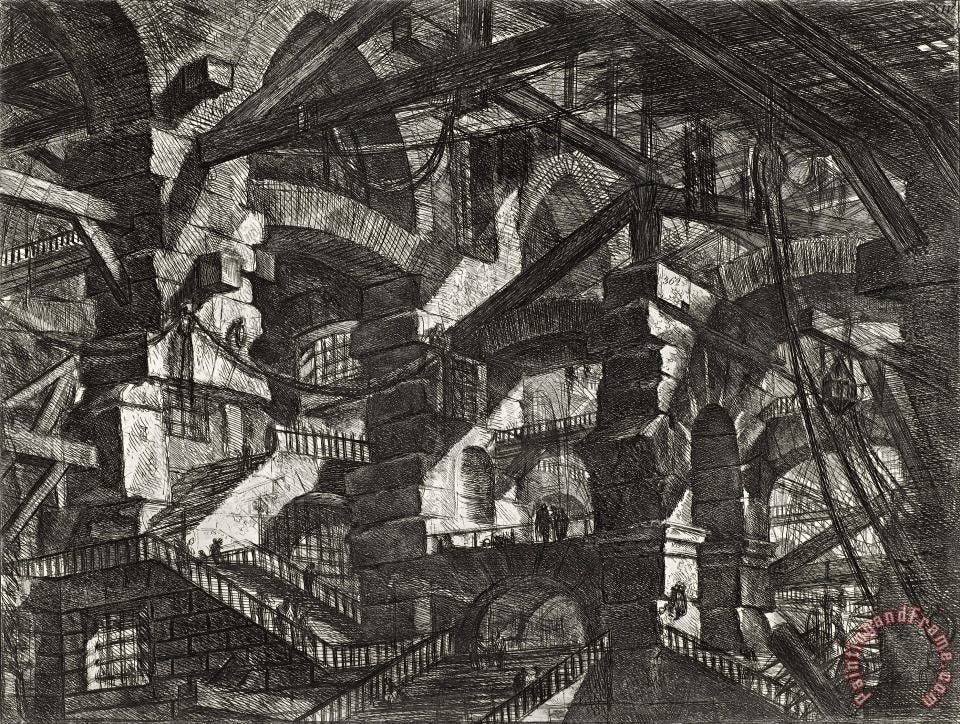
I opened Piranesi in a bookstore and felt the disorientation of encountering my own blueprints in someone else’s hand. The infinite halls, the catalogued statues, the tides that moved through vast spaces - I knew this architecture. Had lived in it.
Susanna Clarke hadn’t just written a fantasy novel. She’d captured dissociative consciousness with architectural precision.
The Beautiful Prison
Piranesi loves the House. He tends the bones in the halls with reverence. He maps tides that threaten to drown him and finds the House “kind” in its provision of birds and fish, never questioning why he needs provision at all.
I recognize this contentment. For years, I lived in similar architecture - functional, even beautiful, but bound by walls I couldn’t see because I’d built them myself. Or, they’d been built for me so early that I mistook them for the borders of existence.
Dissociation isn’t inherently absence - it can be architecture. Something elaborate and functional that reorganizes consciousness to make the unbearable bearable. My own House had infinite rooms where I could store what couldn’t be faced.
The disturbing part isn’t that Piranesi’s trapped. It’s that the trap works so well he experiences it as home. Who would leave a palace, even one with locked doors?
Names and Forgetting
Piranesi isn’t his name. He knows this peripherally - the Other gave him this designation. Piranesi doesn’t mourn his name’s loss because mourning would require remembering there was something to lose.
Systems often rename us to control us. As a therapist, I witness how diagnostic labels can either unlock resources or become cages.
The violence isn’t just in the renaming - it’s in how we accept these imposed identities as truth. Piranesi answers to his given name because the alternative is admitting someone stole his real one.
There’s mercy in selective amnesia when memory would collapse the only structure keeping you upright. Piranesi’s forgetting isn’t failure; it’s structural necessity.
The Other as System
The Other needs Piranesi fragmented yet functional - present enough to map the House but dissociated enough to never question why he lives alone in infinite halls while the Other comes and goes at will.
This is how systems create and maintain dissociative subjects: through careful balance of function and fragmentation. Community mental health left me coherent enough to write treatment plans but dissociated enough to not feel the violence I was documenting.
The Other’s “kindness” toward Piranesi - bringing Piranesi vitamins and shoes and matches, showing concern for his health and safety - maintains the exact level of care that keeps the system operational. Not enough to heal, just enough to survive. This is maintenance without repair.
Piranesi translates the Other’s exploitation into care. He believes the Other protects him from dangerous knowledge, not recognizing that the danger is in not knowing. The House runs on his labor and his maintained belief that the house is all there is. This is extraction disguised as care.
The Third Thing
When Piranesi finally remembers his original name, he doesn’t become that person again. That self drowned in the forgotten halls years ago. He also can’t remain the innocent caretaker of rooms.
After and while healing, you don’t always get your “real” self back. That person is sometimes gone. Instead, you might become someone who can hold multiple architectures simultaneously - the unending halls and the finite world, the beauty of the House and the violence of its construction.
Narratives often insist healing means returning to who you were “before.” But before what? Before the trauma that necessitated dissociation? Before the dissociation that saved you? Before you learned to navigate with the competence of someone born to water?
I am not who I was before dissociation, nor am I still dissociated. I’m a third thing - someone who knows the House intimately enough to recognize its blueprints in Clarke’s prose, but also someone who can close the book and find myself in a house with three finite rooms.
Agency and Return
The novel’s crucial distinction: Piranesi imprisoned versus Piranesi understanding the House’s nature. Once he recognizes its architecture, he can still access its halls - as someone who knows where they are. The architecture remains, but awareness shifts everything.
This is the difference between dissociation as involuntary and misunderstood response and dissociation as recognized state. The critical change is that I recognize it happening and know I can leave. That knowledge itself is freedom, even when the dissociation arrives unbidden.
The Other loses power the moment Piranesi can see the Other clearly as someone who needed Piranesi’s fragmentation for their own purposes. Systems similarly lose their hold when we recognize their investment in our dissociation.
The distinction isn’t between “healed” and “dissociated.” It’s between conscious recognition and unconscious imprisonment.
Accessible Architecture
The House doesn’t disappear at the novel’s end. It remains: patient and available for entry. Piranesi worries about others getting lost there, knowing its seductive power and beauty.
My awareness of my dissociation didn’t demolish the architecture. It gave me an understanding of it.
Clarke illuminates how dissociative architecture can be simultaneously protective and limiting and true and constructed. The House is real. That it exists in consciousness rather than concrete doesn’t diminish it - anyone who recognizes this architecture knows its solidity.
The difference now is I know when I’m in the House. I can appreciate its protective function without forgetting it was born from necessity, built from the materials of what couldn’t be survived any other way.